If someone you care about is using substances and you’ve heard both “crack” and “meth” mentioned, you might wonder: are meth and crack the same? The short answer is no. Crack is a form of cocaine processed with baking soda. Meth is methamphetamine, a synthetic stimulant.
Knowing the difference between crack and meth helps you recognize specific risks and connect your loved one to appropriate stimulant addiction treatment. The details matter when someone’s health is at stake. This article breaks down how crack vs. meth actually differ and what those differences mean for treatment and recovery.
Quick Takeaways
- Crack cocaine delivers a 5-10 minute high requiring constant re-dosing, while crystal meth can keep someone awake and high for up to12 hours.
- Meth mouth and severe tooth decay are hallmark signs of methamphetamine use, whereas crack more commonly causes respiratory damage and heart complications.
- Both drugs can be contaminated with fentanyl, making overdose risks unpredictable even for experienced users.
Key Differences Between Crack and Meth

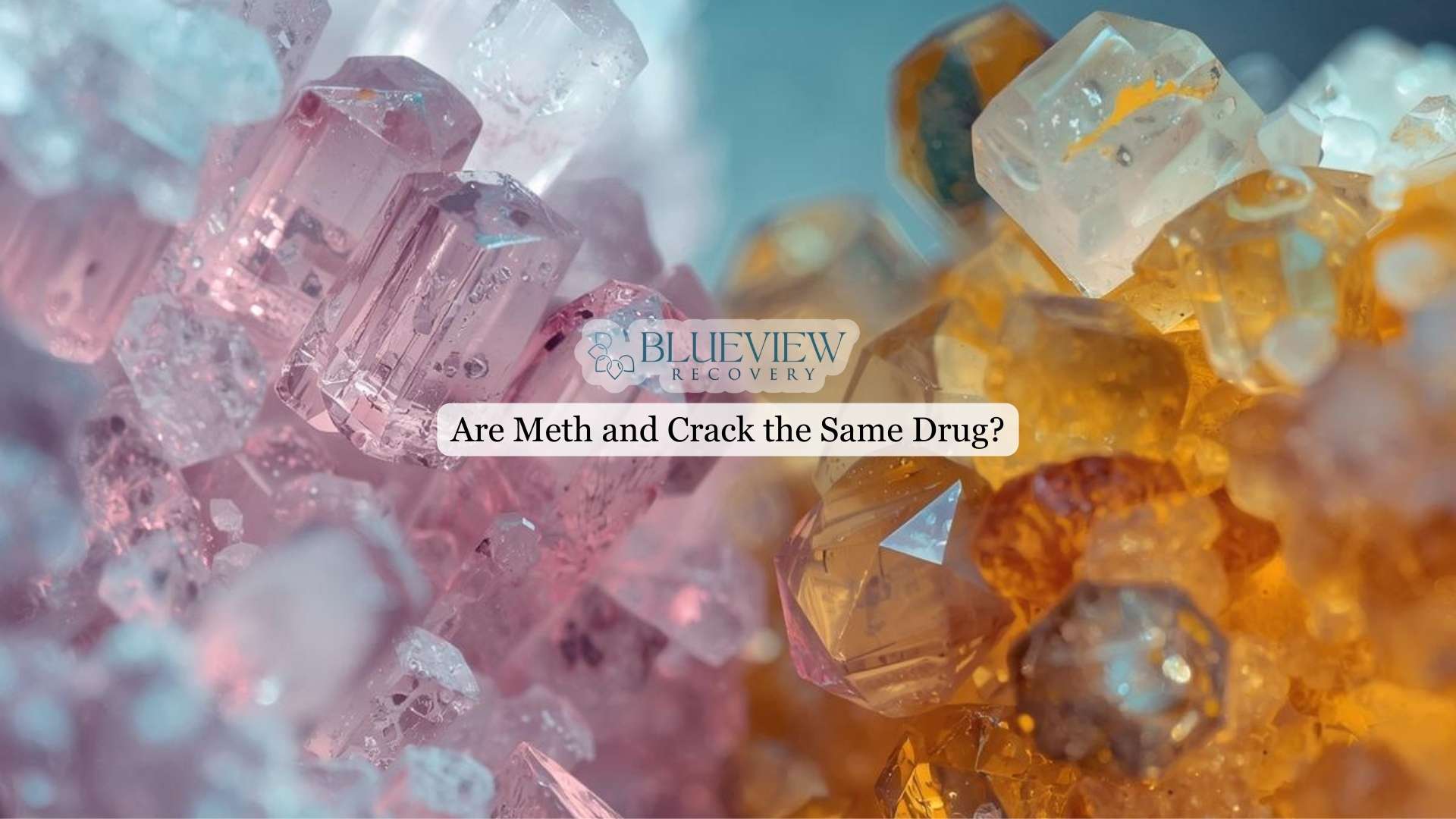
While meth and crack are both central nervous system stimulants with severe addiction potential, they’re chemically distinct substances with different effects and risks. Families often confuse them because both can appear as white or off-white rocks. The table below clarifies what sets these two dangerous substances apart.
| Factor | Crack Cocaine | Crystal Meth |
| Drug Family/Source | Cocaine (coca plant) processed with baking soda | Methamphetamine (synthetic stimulant) |
| Street Forms | Crystallized form, rocks, powder form | Crystalline powder, commonly referred to as “ice” or “crystal.” |
| Typical Routes | Smoked, sometimes injected | Smoked, snorted, injected, swallowed |
| Onset + Duration | Immediate onset, 5-10 minutes high | Fast onset, up to 12 hour high |
| Crash/Comedown Pattern | Rapid psychological crash within 30-60 minutes | Extended period of fatigue, depression over 1-3 days |
| Common Acute Risks | Heart attack, stroke, violent behaviors, high blood pressure | Stimulant psychosis, compulsive scratching, hyperthermia, stroke |
| Long-Term Risks | Heart complications, mental health disorders, and respiratory damage | Meth mouth, severe tooth decay, severe weight loss, and brain structure changes |
| Withdrawal Symptoms | Intense cravings, depression, fatigue, behavioral changes | Intense cravings, depression, anxiety, exhaustion, cognitive impairment |
The duration difference drives distinct behavior patterns. Crack use involves rapid re-dosing throughout the day because crack’s effects fade within minutes, leaving users desperate for another hit. A meth binge can keep someone awake for days, creating prolonged periods of erratic behavior and increasing the risk of stimulant psychosis.
What Crack and Meth Use Look Like Day-to-Day
If you’re watching someone you care about change in ways that don’t make sense, recognizing crack or meth addiction patterns can help you understand what’s happening. Each substance creates distinct behavioral signatures that families and loved ones often notice.
Signs of crack use include:
- Frequent disappearances for 30 to 60 minutes, returning agitated or temporarily calm.
- Burnt spoons, glass pipes, or small plastic baggies around the home.
- Rapid mood swings cycling between euphoria and deep irritability multiple times daily.
- Constant need for money or valuable items that suddenly go missing.
- Respiratory problems, including persistent cough or shortness of breath.
Signs of meth use include:
- Staying awake for multiple days straight during a meth binge.
- Obsessive cleaning or organizing projects that never get finished.
- Skin picking (compulsive scratching) that leaves sores on the face and arms.
- Rapid tooth decay progression known as meth mouth.
- Extreme weight loss over short periods.
- Intense focus on repetitive tasks with no clear purpose.
Research has found that up to 40% of methamphetamine users experience stimulant psychosis at some point. Watch for signs of stimulant psychosis: extreme paranoia, hallucinations (hearing voices or seeing things that aren’t there), violent behaviors toward perceived threats, and complete disconnection from reality.
When to Seek Immediate Help
Call 911 if your loved one shows any of these warning signs:
- Signs of a heart attack: chest pain, arm pain, or difficulty breathing
- Seizure activity of any kind
- Extreme agitation that could turn violent
- Psychotic symptoms that prevent them from recognizing you
- Stroke symptoms: sudden confusion, slurred speech, or facial drooping
Both crack and meth carry significant risks of stroke and cardiac events. Early intervention can prevent permanent damage or death.
Contamination and Fentanyl Risks
Fentanyl contamination has been found in some stimulant supplies, especially powder cocaine and powder methamphetamine. Crystal meth and crack cocaine appear less likely to contain fentanyl in lab testing, but risk can vary by region and supply chain.
Fentanyl test strips are available through harm reduction programs and can detect fentanyl in substances before use. If your loved one won’t stop using, these strips provide some protection against unintentional opioid overdose. Keep naloxone (Narcan) on hand if possible. It won’t reverse stimulant effects, but many overdoses now involve multiple substances. Naloxone can address the opioid component.
If someone overdoses, call 911 immediately. Stay with them. Provide rescue breathing if they’re not breathing. Administer naloxone if available. Tell emergency responders what substance was used if you know. Time matters with an overdose. Honest information helps medical teams provide appropriate treatment.
Treatment Approaches for Crack and Meth Addiction

Treatment for stimulant addiction starts with a comprehensive assessment. Medical teams evaluate the extent of substance use, assess co-occurring mental health disorders, and any physical health complications that require attention. This assessment clarifies whether outpatient treatment is effective or whether higher-intensity care is initially needed.
Outpatient treatment options include:
- Partial hospitalization programs and intensive outpatient programs that provide structure while allowing work and family commitments.
- Multiple therapy sessions per week with group support and individual counseling.
- Flexible scheduling designed for real-life responsibilities.
- Evidence-based behavioral therapies addressing addictive behaviors and coping skills.
Inpatient care may be needed for:
- Severe health risks that require medical monitoring.
- Active psychosis that needs stabilization in a controlled environment.
- Unsafe living environments that make recovery impossible.
- Previous unsuccessful attempts at outpatient treatment.
Long-term recovery requires ongoing support beyond initial treatment. Support services help you rebuild routines and repair relationships while managing triggers with professional guidance. Preventing relapse takes consistent work, and family involvement strengthens recovery by rebuilding trust and creating accountability.
Frequently Asked Questions About Meth vs. Crack
Is crack the same as crystal?
No, crack and crystal are different drugs. Crack is cocaine processed with baking soda into a smokable crystallized form. Crystal refers to crystal meth (methamphetamine). Both are stimulants and highly addictive. Crack’s effects last minutes while crystal meth’s effects can last up to 12 hours.
Can you overdose on crack or meth?
Yes, both crack cocaine and methamphetamine can cause fatal overdose. Crack overdose often involves a heart attack or stroke. Meth overdose may cause hyperthermia or seizures. Cardiac arrest is possible with both drugs. Fentanyl contamination increases overdose risk significantly. Call 911 immediately if someone shows signs of overdose.
Finding Support for Stimulant Addiction Recovery
Recognizing you need help takes courage. This applies no matter what drug you’re struggling with. Comprehensive treatment programs designed for stimulant addiction can provide the structure you need and ongoing support to help you stop using and rebuild your life. Blueview Recovery offers evidence-based outpatient treatment for stimulant addiction. We address crack and meth addiction with programs designed to fit into your real life. Contact Blueview Recovery today to learn about your treatment options